

The Rise of Smart Logistics
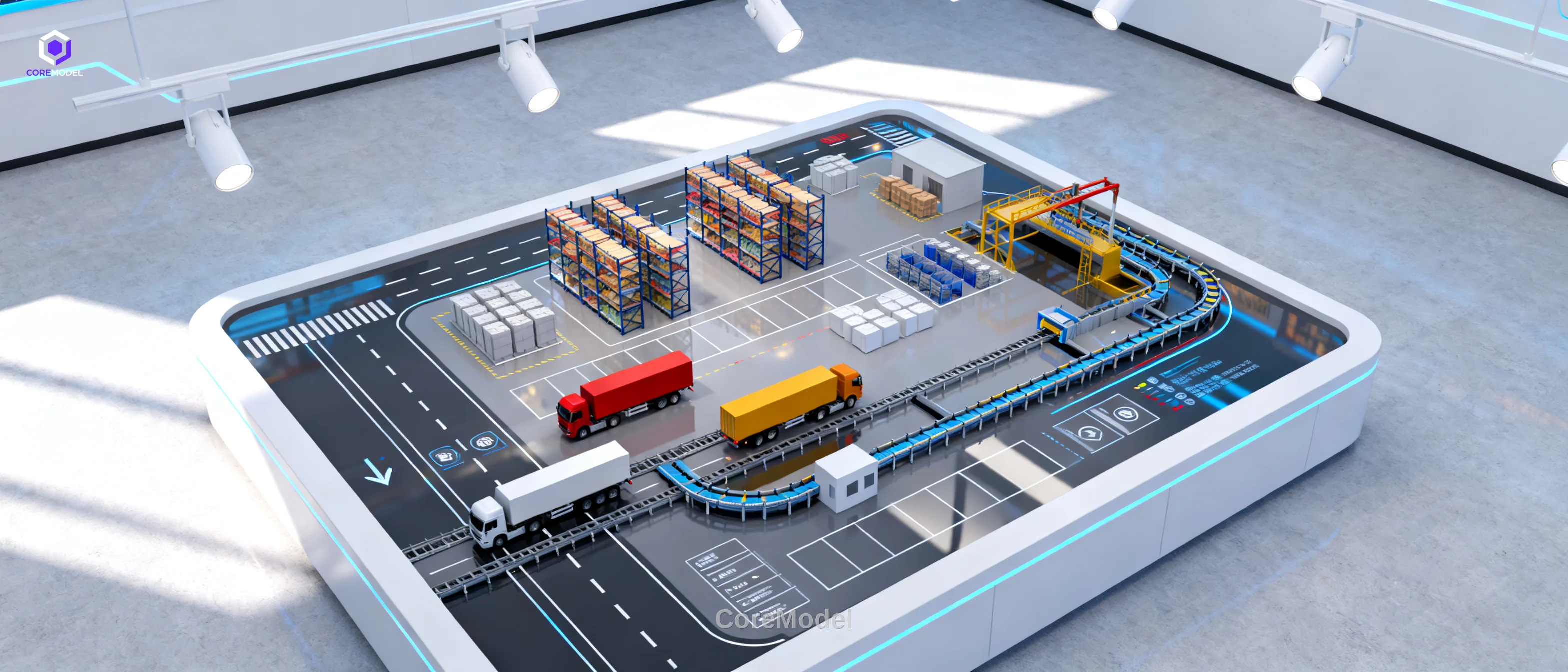
The global logistics industry is undergoing a transformation. Automated storage and retrieval systems (AS/RS), autonomous guided vehicles (AGVs), and AI-driven warehouse management systems are redefining how goods move through supply chains. But before these systems are built, they need to be visualized, validated, and communicated — and that's where scale models play a critical role.
Why Model Smart Logistics Facilities?
1. System Integration Validation
Modern logistics facilities are systems of systems. Conveyor networks, AGV paths, picking stations, and loading docks must all work together seamlessly. A physical model reveals spatial conflicts and flow bottlenecks that are difficult to spot in even the most detailed 3D CAD environment.
2. Stakeholder Buy-In
Warehouse automation projects typically require $10M–$100M in investment. Decision-makers need to see and understand the proposed system before committing capital. A scale model provides that tangible, confidence-building overview.
3. Training and Onboarding
Several of our clients use their models for operator training before the actual facility is operational. New staff can walk around the model and understand the flow of goods, the location of emergency stops, and the relationship between different zones — all before stepping foot in the real building.
What Goes Into a Smart Logistics Model
- Automated racking systems with moving shuttle representations
- AGV pathways with directional indicators and charging stations
- Conveyor networks showing merge points, sorters, and diverters
- LED integration to show operational flow and status
- Interactive elements such as removable roof sections and sliding walls
A Growing Market
In the past three years alone, CoreModel has produced smart logistics models for clients in the Middle East, Southeast Asia, and Europe. Demand is accelerating as more companies invest in warehouse automation and need physical representations for planning and communication.
Looking Ahead
We're now integrating AR markers into logistics models, allowing users to point a tablet at the model and see real-time data overlays — inventory levels, throughput rates, and predicted bottlenecks. The physical model remains the foundation, but digital augmentation adds a powerful new dimension of insight.