

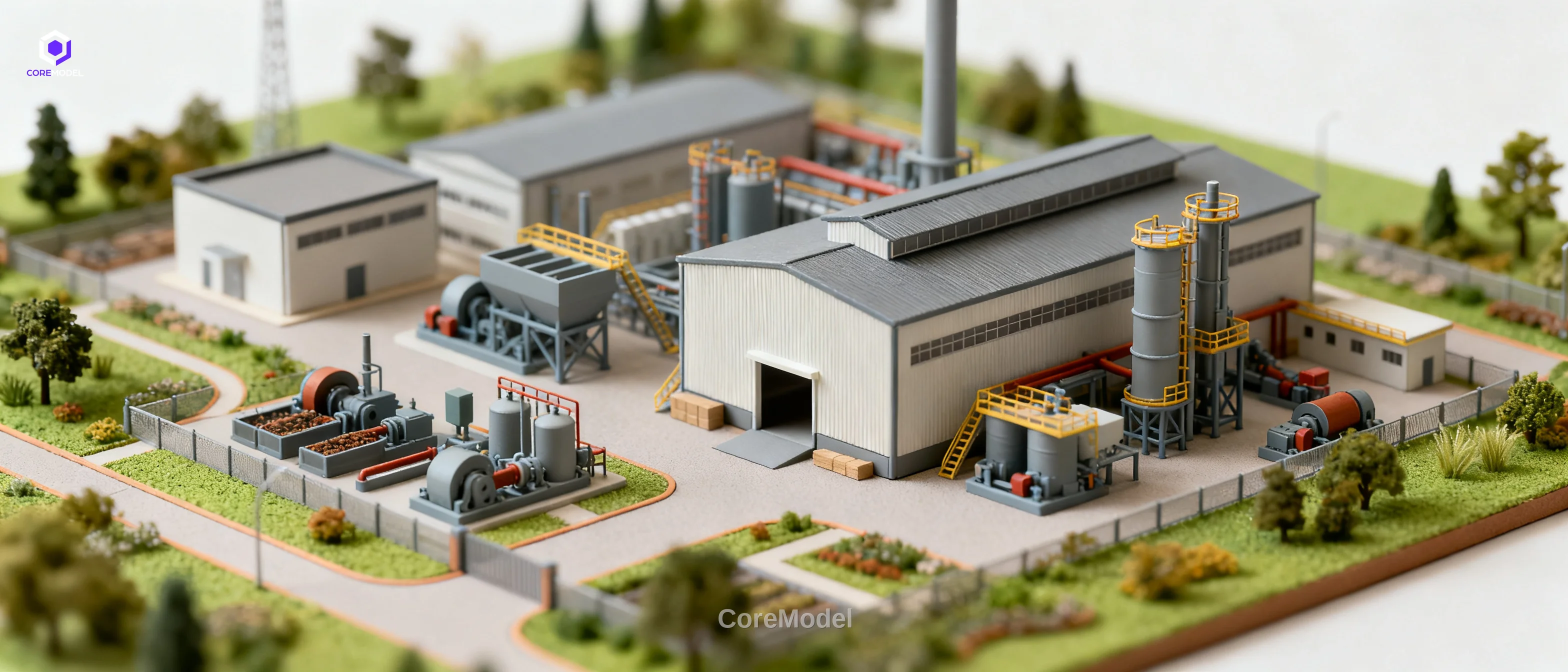
Introduction: Why Physical Scale Models Remain Indispensable
In an era dominated by digital twins and virtual reality, the physical scale model continues to prove its unique value across industries. From urban planning to aerospace engineering, these tangible representations offer a tactile, three-dimensional understanding that no screen can replicate. At CoreModel, with over 15 years of experience serving 80+ countries, we have witnessed firsthand how a well-crafted scale model can transform stakeholder communication, accelerate project approvals, and reduce costly errors. This guide explores the enduring importance of physical scale models and how they complement modern design workflows.
1. The Unique Advantages of Physical Scale Models
1.1 Tangible Communication
While 3D renderings and BIM models provide digital precision, a physical scale model offers an immediate, intuitive understanding. Stakeholders can walk around it, view it from any angle, and grasp spatial relationships without technical training. This is especially critical for urban planning models and architectural scale models, where community engagement and investor confidence depend on clear communication.
1.2 Enhanced Collaboration
When engineers, architects, and clients gather around a scale model, discussions become more focused and productive. The model serves as a neutral reference point, helping to identify design conflicts early. For complex projects like petrochemical models or rail transit models, this collaborative advantage can save weeks of revision.
1.3 Marketing & Presentation Impact
In trade shows, boardrooms, and public hearings, a physical scale model commands attention. Its craftsmanship conveys quality and attention to detail, reinforcing your brand’s credibility. Custom industrial dioramas and new energy models are particularly effective for showcasing innovative technologies to potential partners and investors.
2. Applications Across Key Industries
2.1 Architecture & Urban Planning
Architectural scale models remain the gold standard for presenting building designs and master plans. They allow planners to simulate sunlight, traffic flow, and pedestrian movement in a way that 2D drawings cannot. For large-scale developments, urban planning models help communities visualize the final outcome, building public support.
2.2 Energy & Petrochemical
The energy sector relies on physical scale models for safety training, equipment layout, and regulatory approval. New energy models (solar farms, wind turbines) and petrochemical models (refineries, pipelines) provide a risk-free environment to test configurations and emergency procedures.
2.3 Transportation & Defense
Rail transit models and defense & aerospace models are essential for system integration and maintenance planning. These highly detailed replicas help engineers visualize complex subsystems and train personnel without disrupting real operations.
2.4 Smart Logistics
In warehousing and distribution, smart logistics models simulate material flow, robot paths, and storage optimization. They are invaluable for convincing stakeholders of the ROI of automation investments.
3. How CoreModel Elevates the Physical Scale Model
With 15+ years of expertise, CoreModel combines traditional craftsmanship with modern technology. Our process begins with your CAD data or design brief, then moves to precision fabrication using CNC machining, 3D printing, and hand assembly. We integrate lighting, moving parts, and realistic textures to create scale models that are not just accurate, but also compelling. Whether you need a single industrial diorama or a series of architectural scale models, our team ensures every detail meets your specifications.
4. Integrating Physical and Digital: The Hybrid Approach
The most effective projects today combine physical scale models with digital tools. For example, a scale model can be augmented with QR codes that link to real-time data, or used as a tangible interface for VR walkthroughs. This hybrid approach leverages the strengths of both worlds: the intuitive, hands-on nature of physical models and the data-rich flexibility of digital platforms.
Conclusion: Invest in the Power of Physical Scale Models
As technology advances, the role of the physical scale model is not diminishing—it is evolving. In a world of screens, a tangible object creates a lasting impression. Whether you are planning a new city district, designing a refinery, or launching a defense system, a custom scale model from CoreModel will help you communicate your vision with clarity and impact. Contact us today to discuss your next project.