

Introduction
In an era dominated by digital twin technology and virtual reality, the physical scale model remains an indispensable tool for architects, engineers, and urban planners. These tangible, three-dimensional representations offer a level of spatial understanding and tactile engagement that no screen can replicate. At CoreModel, a leading manufacturer based in Shenzhen, China, with over 15 years of experience serving 80+ countries, we have witnessed firsthand how physical scale models bridge the gap between concept and reality. This article explores the enduring value of physical scale models in modern industry, from urban planning to aerospace.
What Are Physical Scale Models?
A physical scale model is a three-dimensional, scaled-down representation of an object, building, or landscape. Unlike digital models, they are crafted from materials such as acrylic, wood, resin, or metal, allowing viewers to interact with the model through touch and sight. These models are used across industries for design validation, client presentations, and public exhibitions. The precision and craftsmanship involved in creating a high-quality scale model can significantly enhance project communication and decision-making.
Applications Across Industries
Architectural and Urban Planning Models
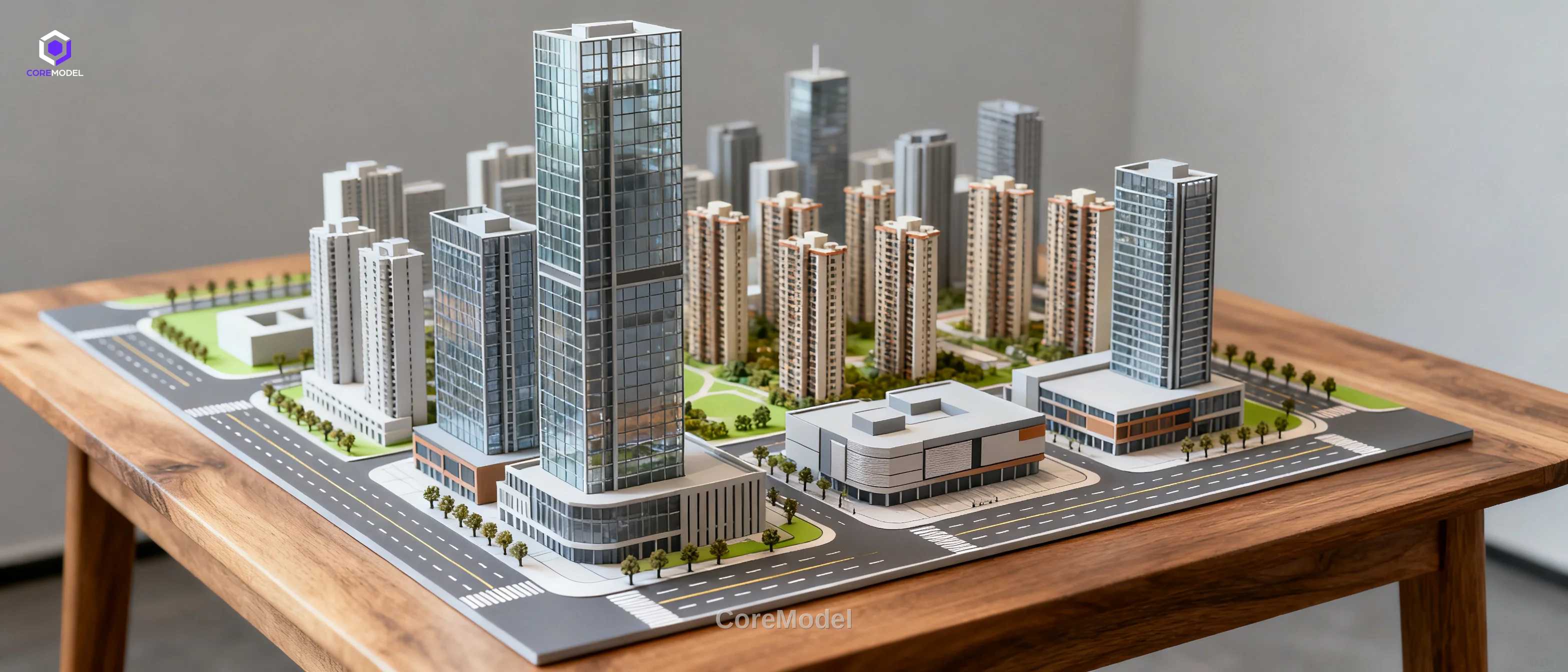
Architects and city planners rely on physical scale models to visualize how new buildings fit into existing environments. A well-crafted model can reveal sightlines, shadow patterns, and spatial relationships that are difficult to grasp from blueprints or digital renders. For large-scale urban planning projects, sand table models provide a bird's-eye view of entire districts, helping stakeholders understand traffic flow, green spaces, and infrastructure.
Industrial and Energy Sector Models
In the petrochemical and new energy sectors, physical scale models are used to simulate complex industrial facilities. These models help engineers plan layouts, test safety protocols, and train personnel. For example, a physical scale model of an oil refinery can illustrate the placement of pipes, tanks, and processing units, reducing the risk of costly errors during construction.
Defense, Aerospace, and Transportation
The defense and aerospace industries use highly detailed scale models for system integration, aerodynamic testing, and mission planning. Similarly, rail transit authorities use models to demonstrate station designs and track alignments. These models often incorporate lighting and moving parts to simulate real-world operations.
Advantages Over Digital Representations
While CAD and BIM software are powerful, physical scale models offer unique benefits:
- Tactile Engagement: Stakeholders can walk around the model, inspect details, and gain a intuitive sense of scale.
- Visual Clarity: A physical model eliminates the distortion of perspective that can occur on a screen.
- Collaboration: Groups can gather around a model, point to specific areas, and discuss changes in real time.
- Presentation Impact: A beautifully crafted model creates a lasting impression on clients and investors.
These advantages make physical models an essential complement to digital tools, especially in high-stakes projects where clarity is critical.
CoreModel's Expertise in Physical Scale Models
With over 15 years of experience, CoreModel has delivered thousands of custom physical scale models to clients across 80+ countries. Our team combines traditional craftsmanship with modern technologies like CNC machining, laser cutting, and 3D printing to achieve unparalleled precision. We specialize in:
- Architectural scale models for residential, commercial, and mixed-use developments.
- Urban planning models that capture entire city blocks or districts.
- Industrial dioramas for petrochemical, energy, and manufacturing facilities.
- Transportation models for rail, aviation, and maritime projects.
- Defense and aerospace models for system integration and display.
Our commitment to quality and detail ensures that every model serves as a powerful communication tool.
Conclusion
In a world increasingly reliant on digital visualization, the physical scale model remains a vital tool for communication, validation, and inspiration. Whether you are an architect seeking to win a bid, an engineer planning a complex facility, or a city planner engaging the public, a high-quality scale model can make all the difference. At CoreModel, we are dedicated to bringing your vision to life in miniature—with precision, artistry, and reliability. Contact us today to discuss your next project.