
Introduction to Factory Layout Models
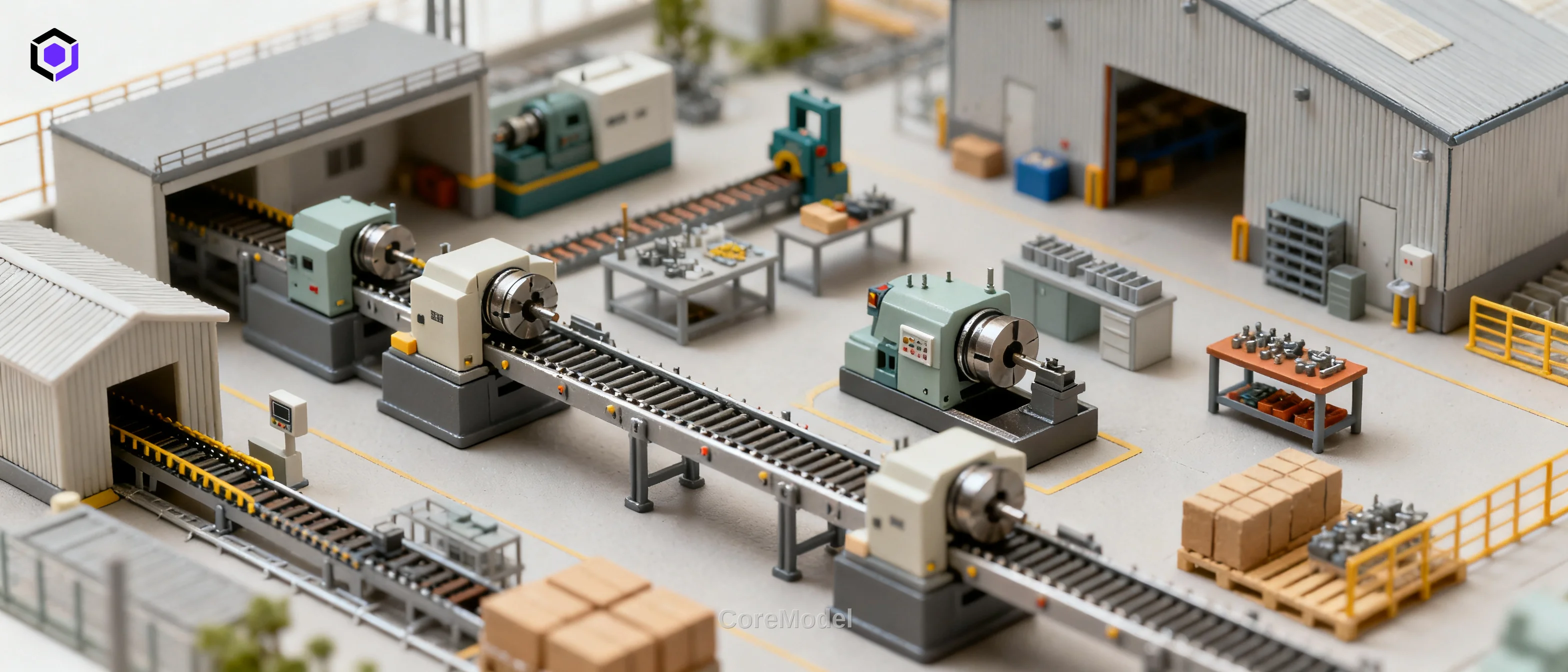
In the competitive landscape of modern manufacturing, optimizing plant design is paramount to operational efficiency and cost reduction. Factory layout models have emerged as an indispensable tool for engineers, facility planners, and decision-makers. These physical miniature replicas offer a tangible, three-dimensional representation of a production facility, allowing stakeholders to visualize, analyze, and refine complex industrial layouts before a single foundation is poured. At CoreModel, we leverage 15+ years of expertise to deliver custom industrial dioramas that transform abstract CAD data into interactive, decision-ready models.
Why Factory Layout Models Matter for Industrial Planning
Industrial facility planning involves numerous variables: workflow optimization, equipment spacing, safety compliance, and material flow. Traditional 2D blueprints and digital renders often fail to convey spatial relationships effectively. Factory layout models bridge this gap by providing a physical, scaled representation that can be viewed from any angle. They enable engineers to spot potential bottlenecks, clearance issues, and ergonomic flaws that might be overlooked on screen. For new energy, petrochemical, and rail transit projects, these models are critical for validating complex processes and ensuring seamless integration of machinery and utilities.
Enhanced Communication and Stakeholder Engagement
One of the most significant advantages of physical scale models is their ability to facilitate communication among diverse stakeholders. Investors, plant managers, and frontline operators can all gather around a factory layout model and discuss operational changes with clarity. This collaborative approach reduces misunderstandings and accelerates decision-making. Unlike virtual reality, which requires special equipment, a physical model is accessible to everyone, making it an excellent tool for presentations, training, and public hearings.
Key Benefits of Using Factory Layout Models
- Error Reduction: Identify design flaws early, saving time and capital.
- Cost Efficiency: Avoid expensive modifications during construction or retrofitting.
- Safety Compliance: Ensure clear emergency exits, hazard zones, and proper equipment clearances.
- Workflow Optimization: Visualize material flow and minimize unnecessary movement.
- Training and Demonstration: Use models for operator training and client presentations.
How Factory Layout Models Are Built: From CAD to Physical Reality
At CoreModel, we employ a meticulous process to create high-fidelity factory layout models. Our engineers begin by analyzing your CAD files, GIS data, and production specifications. We then construct the model using a combination of advanced 3D printing, CNC machining, and hand-crafted assembly. Materials such as acrylic, ABS plastic, and precision-etched metal are selected for durability and detail. Each component—from conveyor belts to storage racks—is accurately scaled and painted to match your actual equipment. The result is a museum-quality replica that serves as a powerful planning and marketing asset.
Applications Across Industries
Our factory layout models serve a wide range of sectors. In the petrochemical industry, they help plan complex piping systems and safety zones. For smart logistics, they illustrate automated storage and retrieval systems. Defense and aerospace projects use them to demonstrate assembly lines and maintenance facilities. Additionally, urban planning models often incorporate factory zones to show industrial impact on city infrastructure. Whatever your sector, a physical model can provide unmatched clarity and confidence.
Case Study: Optimizing a New Energy Plant Layout
Recently, CoreModel partnered with a leading new energy manufacturer to develop a factory layout model for a lithium battery production facility. The client faced challenges with material flow and cleanroom zoning. By creating a detailed scale model, our team enabled the client to visualize the entire production line, identify a critical bottleneck in the electrode coating area, and reconfigure the layout to improve throughput by 15%. The model also facilitated regulatory approval by clearly demonstrating compliance with safety standards.
Choosing the Right Factory Layout Model Partner
When selecting a manufacturer for your factory layout model, consider their experience, customization capabilities, and attention to detail. CoreModel stands out with 15+ years of expertise, serving 80+ countries. We offer end-to-end services, from initial consultation to installation, ensuring your model meets exact specifications. Whether you need a simple tabletop display or a large-scale interactive diorama with lighting and moving parts, we deliver excellence.
Conclusion: Invest in Precision with CoreModel
In an era of digitalization, the tactile value of a physical factory layout model remains unparalleled. It bridges the gap between concept and reality, enabling smarter decisions and fostering collaboration. Whether you are planning a greenfield facility or optimizing an existing plant, CoreModel can craft a scale model that drives success. Contact us today to discuss your project and discover how our industrial dioramas can transform your factory planning process.