
Why Offshore Platform Models Matter in Modern Industry
Offshore platform models are more than just miniature replicas—they are powerful tools for engineering validation, stakeholder communication, and operational training. In the oil and gas, renewable energy, and maritime sectors, these scale models provide a tangible representation of complex offshore structures that are otherwise inaccessible or dangerous to view in person. At CoreModel, we have spent over 15 years perfecting the art and science of creating highly detailed offshore platform models for clients in more than 80 countries.
What Are Offshore Platform Models?
Offshore platform models are scaled-down physical representations of fixed or floating offshore structures. These can include oil and gas platforms, wind turbine foundations, FPSOs (Floating Production Storage and Offloading vessels), and subsea systems. Typically built to scales ranging from 1:50 to 1:500, these models capture the intricate details of the platform's layout, equipment, and structural elements.
Unlike simple display models, professional offshore platform models are often used for:
- Engineering design reviews – to visualize and test layout concepts
- Safety training – to familiarize personnel with emergency procedures
- Marketing and investor relations – to showcase projects to stakeholders
- Museum and exhibition displays – to educate the public about offshore energy
Types of Offshore Platform Models
Depending on the application, offshore platform models can be categorized into several types:
- Jack-up rig models – featuring retractable legs and drilling derricks
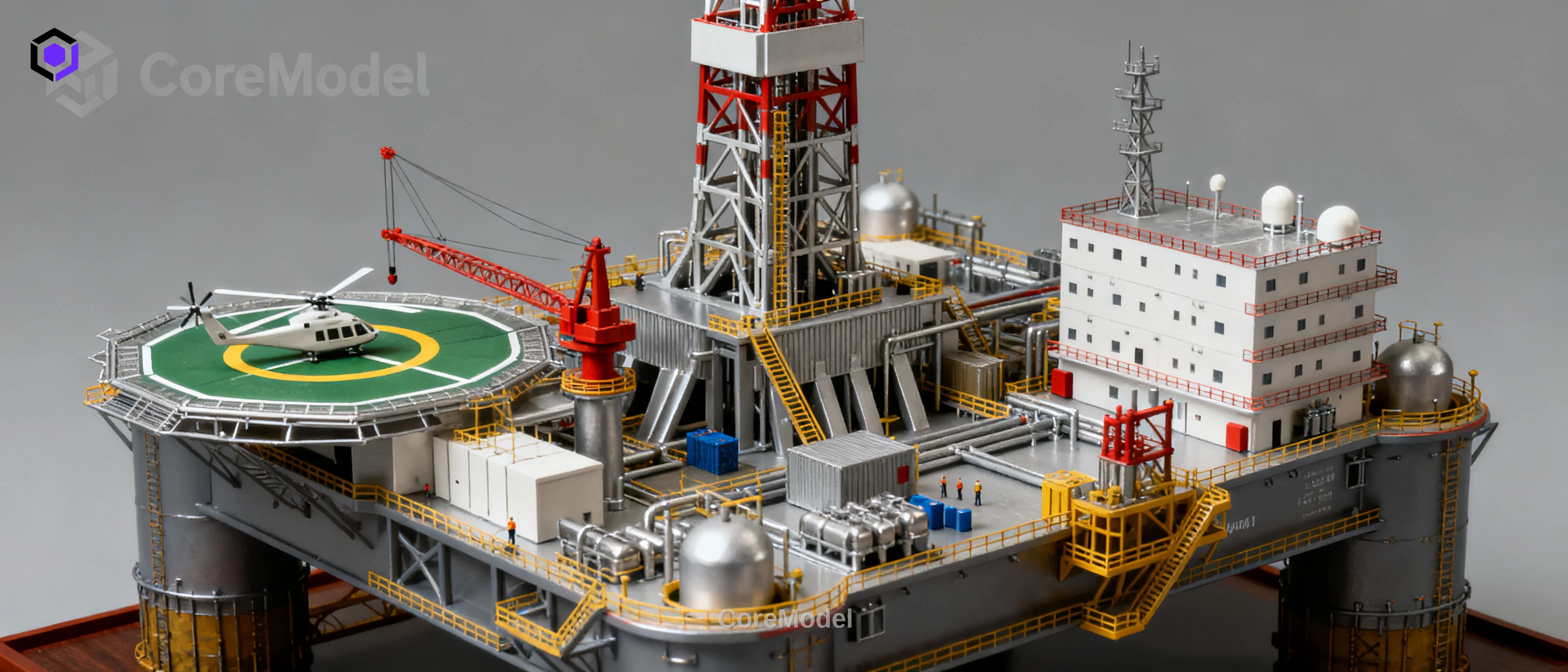
- Semi-submersible models – with ballast tanks and mooring systems
- FPSO models – including turret mooring and processing modules
- Offshore wind farm models – with turbine arrays and substations
Each type requires specialized knowledge of offshore engineering and model-making techniques.
The Craftsmanship Behind CoreModel's Offshore Platform Models
Creating a high-fidelity offshore platform model demands a blend of traditional craftsmanship and modern technology. At our Shenzhen facility, we combine 3D printing, CNC machining, and hand-assembly to achieve exceptional detail and durability. Our process typically involves:
- Client consultation – understanding the purpose, scale, and specific features required
- Design and engineering – using CAD files and blueprints to create a precise digital model
- Fabrication – producing components through 3D printing, laser cutting, and CNC milling
- Assembly and finishing – hand-painting, detailing, and adding lighting effects
- Quality assurance – rigorous inspection to ensure accuracy and durability
We pay meticulous attention to elements such as piping, walkways, cranes, helipads, and even miniature crew figures. For interactive models, we integrate LED lighting, motorized parts, and touchscreen controls to simulate operational scenarios.
Materials and Technologies Used
We use a wide range of materials to ensure both realism and longevity:
- Acrylic and polyurethane – for transparent elements and hulls
- Brass and stainless steel – for structural components and piping
- ABS plastic and resin – for detailed equipment and modules
- LED lighting systems – for realistic illumination
Advanced technologies like CNC machining and laser engraving allow us to achieve tolerances within 0.1mm, ensuring that every model meets the highest standards.
Applications Across Industries
Offshore platform models serve a diverse range of industries and purposes. Here are some key applications:
Oil and Gas Industry
In the oil and gas sector, these models are used for engineering design verification, safety drills, and investor presentations. They allow engineers to visualize complex systems and identify potential issues before construction begins.
Renewable Energy
With the rapid growth of offshore wind farms, models of wind turbines and substations are in high demand for public consultation and project planning. They help communicate the scale and layout of wind farms to local communities and regulators.
Maritime and Defense
Naval architects and defense contractors use offshore platform models for training simulators and mission planning. These models can be integrated with VR systems for immersive experiences.
Education and Museums
Museums and educational institutions use offshore platform models to teach students and the public about offshore engineering and energy production. Interactive models with lighting and moving parts are particularly engaging.
Why Choose CoreModel for Your Offshore Platform Model?
With over 15 years of experience and a portfolio of more than 5,000 projects, CoreModel has established itself as a trusted partner for offshore platform models. Our key strengths include:
- Global reach – serving clients in 80+ countries
- In-house production – full control over quality and lead times
- Customization – tailored to your specific scale, features, and budget
- Expert team – engineers, designers, and craftsmen under one roof
- Competitive pricing – direct from our Shenzhen factory
We understand the unique challenges of representing offshore structures accurately. Whether you need a single display model or a fleet of training models, we deliver precision and reliability.
Conclusion
Offshore platform models are indispensable tools for industries that operate in some of the world's most challenging environments. They bridge the gap between complex engineering and human understanding, enabling better design, safer operations, and more effective communication. If you're looking for a partner to create a high-quality offshore platform model, CoreModel is here to help. Contact us today to discuss your project and receive a free consultation.