
Introduction to Solar Plant Models
In the rapidly evolving renewable energy sector, solar plant models have become indispensable tools for stakeholders. These physical scale models provide a tangible representation of complex solar installations, aiding in design, planning, and communication. At CoreModel, with over 15 years of experience and clients in 80+ countries, we specialize in crafting high-precision solar plant models that serve a multitude of purposes.
What Are Solar Plant Models?
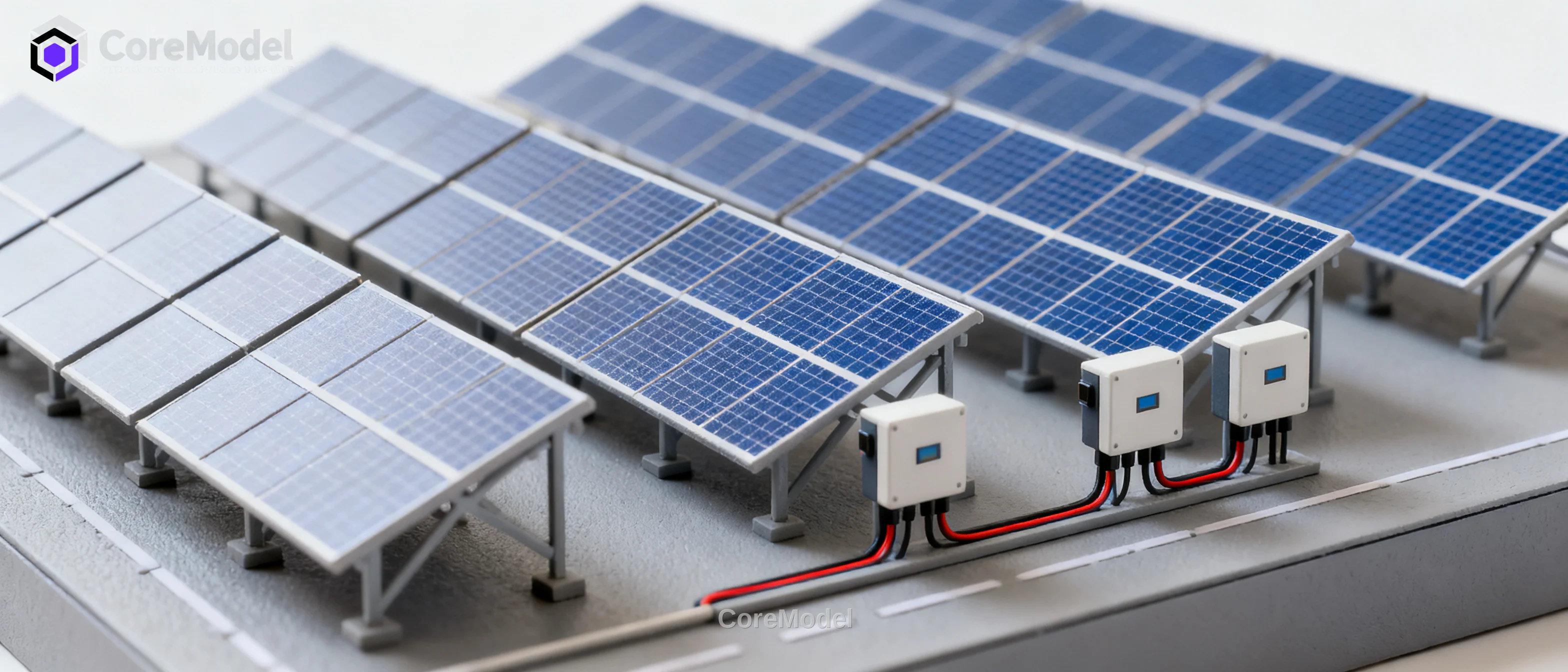
Solar plant models are scaled-down replicas of solar energy facilities, including photovoltaic (PV) farms, concentrated solar power (CSP) plants, and hybrid systems. They are meticulously designed to reflect the actual layout, components, and environmental context of a solar installation. These models are used for various applications, from investor presentations to educational exhibits.
CoreModel's solar plant models are crafted using advanced techniques such as 3D printing, laser cutting, and hand assembly, ensuring accuracy and durability. Our models can incorporate interactive elements, lighting, and moving parts to simulate real-world operations.
Key Components of a Solar Plant Model
A typical solar plant model includes:
- Solar panels: Represented in arrays, often with reflective materials to mimic glass.
- Mounting structures: Fixed or tracking systems, accurately scaled.
- Inverters and transformers: Miniaturized but detailed.
- Power lines and substations: Showing grid connection.
- Terrain and landscaping: To depict the site's topography.
Applications of Solar Plant Models
Solar plant models serve diverse industries and purposes:
1. Project Development and Investment
Developers use models to secure funding by providing investors with a clear visual of the project. A well-crafted model can convey the scale, technology, and expected output, building confidence.
2. Engineering and Design Validation
Engineers utilize models to test layout efficiency, shading analysis, and structural integrity. Physical models allow for a hands-on review that digital models sometimes miss.
3. Education and Public Outreach
Museums, universities, and trade shows use solar plant models to educate the public about renewable energy. Interactive models can demonstrate how solar energy is harnessed and distributed.
4. Marketing and Sales
Companies in the solar industry use models as powerful marketing tools at exhibitions and client meetings. A detailed model can set a company apart from competitors.
Benefits of Physical Solar Plant Models
While digital simulations are common, physical models offer unique advantages:
- Tangible experience: Stakeholders can view the project from any angle, gaining a spatial understanding.
- Enhanced communication: Models bridge language barriers and technical jargon, making complex concepts accessible.
- Memorable impact: A physical model leaves a lasting impression, ideal for pitches and exhibitions.
- Customization: Models can be tailored to specific project requirements, including branding and interactive features.
How CoreModel Creates Solar Plant Models
At CoreModel, we follow a meticulous process to ensure each model meets our clients' expectations:
- Consultation: We understand the project scope, purpose, and desired level of detail.
- Design: Our team uses CAD software to create a precise digital model, which is then reviewed with the client.
- Fabrication: Using materials like acrylic, ABS, and metals, we employ 3D printing, CNC machining, and laser cutting.
- Assembly: Skilled artisans hand-assemble components, adding details like wiring and landscaping.
- Quality Control: Each model undergoes rigorous inspection for accuracy and finish.
- Delivery: We package models securely and ship worldwide, ensuring they arrive in perfect condition.
Choosing the Right Solar Plant Model Manufacturer
When selecting a manufacturer for solar plant models, consider:
- Experience: Look for a company with a proven track record in the renewable energy sector.
- Customization: Ensure they can tailor the model to your specific needs.
- Quality: Request samples or references to assess craftsmanship.
- Turnaround Time: Discuss timelines to align with your project schedule.
- Global Reach: A manufacturer with international experience can handle logistics and cultural nuances.
CoreModel excels in all these areas, with 15+ years of experience and a portfolio spanning 80+ countries.
Future Trends in Solar Plant Models
As solar technology advances, so do the models. We see trends towards:
- Integration with AR/VR: Combining physical models with augmented reality for enhanced visualization.
- Smart models: Incorporating sensors and IoT to simulate real-time performance data.
- Sustainability: Using eco-friendly materials in model production.
- Modular designs: Allowing for easy updates as projects evolve.
Conclusion
Solar plant models are more than just miniature replicas; they are powerful communication and planning tools that drive the renewable energy industry forward. Whether for investment, engineering, or education, a high-quality model from CoreModel can elevate your project. With our expertise and commitment to excellence, we help you bring your solar vision to life. Contact CoreModel today to discuss your custom solar plant model requirements.