
Introduction to Manufacturing Plant Models
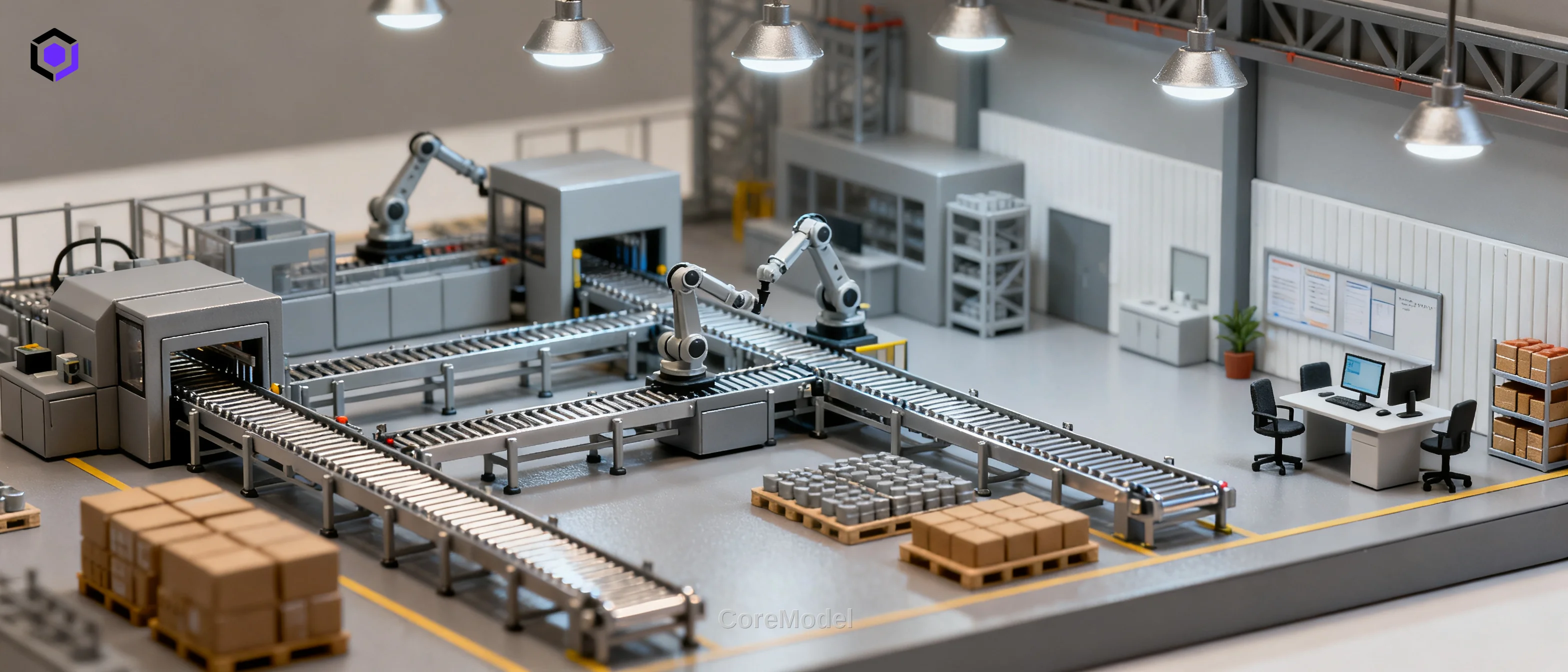
In the world of industrial planning and development, manufacturing plant models have evolved from simple conceptual aids into indispensable tools for engineers, architects, and business leaders. These highly detailed physical replicas offer a tangible representation of complex facilities, enabling stakeholders to visualize, analyze, and optimize every aspect of a manufacturing operation before a single foundation is laid.
At CoreModel, with over 15 years of experience and serving clients in more than 80 countries, we have witnessed firsthand how these models transform projects. Whether for a new petrochemical facility, an automotive assembly line, or a food processing plant, our custom industrial dioramas provide clarity that 2D drawings or digital models alone cannot achieve.
Why Manufacturing Plant Models Matter
Enhanced Communication and Collaboration
One of the primary benefits of a physical plant model is its ability to bridge communication gaps. Engineers, investors, and local authorities often have different perspectives. A physical model places everyone on the same page, literally. It allows for interactive discussions about workflow, safety zones, and expansion possibilities, reducing misunderstandings and speeding up decision-making.
Effective Marketing and Public Relations
For companies seeking investment or community approval, a visually striking model serves as a powerful marketing tool. It can be displayed at trade shows, investor meetings, or public consultations. A well-crafted model demonstrates professionalism and thorough planning, instilling confidence in stakeholders and the public.
Types of Manufacturing Plant Models We Create
CoreModel specializes in a diverse range of industrial models, each tailored to specific sectors:
- Petrochemical Plant Models – Illustrating complex piping systems, reactors, and storage facilities.
- New Energy Plant Models – Including solar farms, wind turbine layouts, and battery production facilities.
- Automotive Manufacturing Models – Detailing assembly lines, robotic workstations, and logistics flows.
- Food & Beverage Processing Models – Highlighting hygiene zones, equipment, and packaging lines.
The CoreModel Process: From CAD to Finished Model
Consultation and Data Collection
Every project begins with a deep dive into your technical drawings, 3D models, and operational requirements. Our engineers work closely with your team to determine the appropriate scale, level of detail, and materials.
Design and Engineering
Using advanced CAD software, we create a digital blueprint of the model. This step ensures that every component, from structural steel to valve positions, is accurately represented. We also factor in lighting, cutaway sections, and movable parts as needed.
Precision Fabrication
Our skilled technicians then manufacture the model using a combination of CNC machining, 3D printing, and hand-crafting techniques. Materials such as acrylic, resin, and metal are selected for durability and realism. The final assembly involves meticulous painting, weathering, and labeling.
Quality Assurance
Before delivery, each model undergoes rigorous quality checks. We verify scale accuracy, structural integrity, and aesthetic finish. Our goal is to deliver a model that not only looks impressive but also serves as a functional reference tool.
Applications and Benefits Across Industries
Manufacturing plant models are used in a variety of settings:
- Pre-Construction Planning – Identify potential bottlenecks, safety hazards, and space inefficiencies.
- Training and Education – Provide a safe, hands-on way to train operators on complex processes.
- Maintenance and Operations – Use as a visual guide for troubleshooting and routine inspections.
- Sales and Exhibitions – Showcase your manufacturing capabilities to potential clients and partners.
By investing in a physical model, companies often reduce costly design errors, improve operational efficiency, and accelerate project timelines. It’s a strategic investment with a high return.
Why Choose CoreModel for Your Manufacturing Plant Model?
With a legacy of 15+ years and a global footprint, CoreModel stands out for several reasons:
- Expertise – Our team understands the technical nuances of diverse industrial sectors.
- Customization – Every model is built to your exact specifications, no matter how complex.
- Quality – We use premium materials and advanced manufacturing techniques.
- Timely Delivery – We respect your deadlines and ensure on-time project completion.
- Global Support – Our international logistics network ensures safe delivery to any location.
Conclusion
In an era of digital twins and virtual reality, the tactile, tangible value of a manufacturing plant model remains unmatched. It provides a shared vision, a marketing asset, and a planning tool all in one. If you are embarking on a new industrial project or need to communicate an existing facility’s design, consider partnering with CoreModel. Our custom industrial dioramas are engineered to impress and inform.
Contact us today to discuss your project and receive a personalized quote. Let us bring your manufacturing vision to life in stunning detail.