

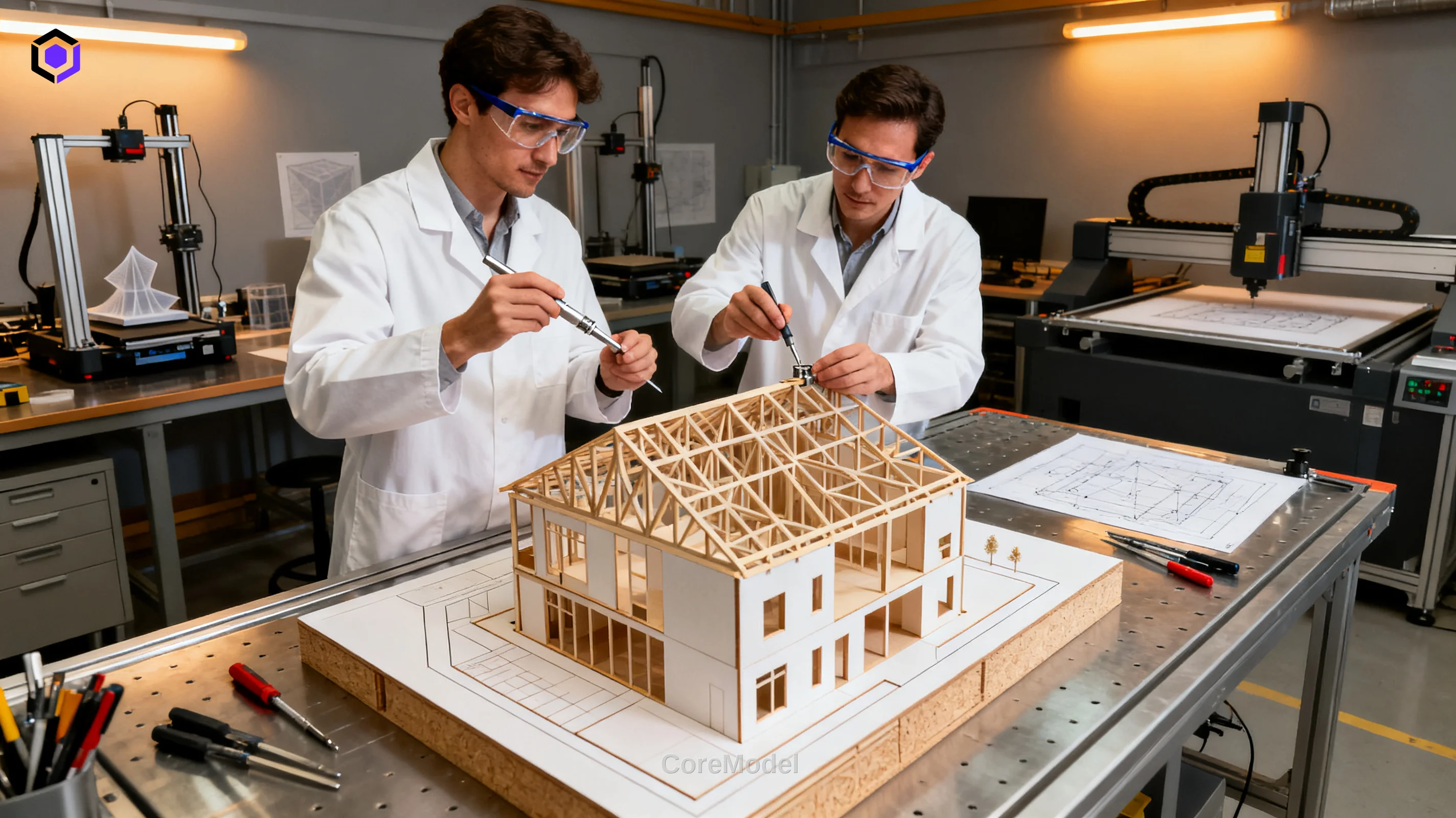
What Is Scale Model Manufacturing?
Scale model manufacturing is the precision-driven process of designing and fabricating miniature replicas of buildings, industrial facilities, infrastructure, and products at a defined ratio. For B2B buyers, these models serve as powerful communication tools — from architectural presentations and urban planning approvals to industrial training and trade show exhibits.
At CoreModel, we have spent over 15 years refining scale model manufacturing for clients in more than 80 countries. This guide explains the end-to-end process, key technologies, and what to look for in a manufacturing partner.
The Scale Model Manufacturing Process
1. Design Brief and Technical Review
Every project begins with a detailed brief. Our engineers review CAD files, architectural drawings, and reference materials to establish the scale, level of detail, and materials. Clear communication at this stage prevents costly revisions later.
2. CAD Modeling and Engineering
Using advanced 3D modeling software, we convert client data into production-ready files. This step ensures dimensional accuracy and allows for design validation before any physical work begins.
3. Material Selection and Fabrication
Scale model manufacturing relies on a range of materials — acrylic, ABS, brass, wood, and specialty resins. The choice depends on the model type: for example, industrial dioramas may require durable metals, while architectural scale models often use acrylic for transparency and clean edges.
4. CNC Machining, Laser Cutting, and 3D Printing
Computer-controlled processes deliver repeatable precision. CNC routers shape large components, laser cutters handle fine details, and industrial 3D printers produce complex geometries. These technologies are combined with skilled hand assembly for a flawless finish.
5. Painting, Detailing, and Lighting
Airbrushing, photo-etching, and LED lighting systems bring models to life. Lighting is especially important for urban planning models and smart logistics models, where illuminated pathways and data visualizations enhance storytelling.
6. Quality Control and Global Shipping
Each model undergoes rigorous inspection against the original specifications. We then pack using custom foam inserts and export-grade crates to ensure safe delivery worldwide.
Key Technologies in Modern Scale Model Manufacturing
Competitive scale model manufacturers invest in a hybrid approach — combining digital fabrication with traditional craftsmanship. CoreModel’s Shenzhen facility integrates:
- 5-axis CNC machining for complex, large-scale components
- Industrial SLA and SLS 3D printing for intricate details
- Laser engraving and photo-etching for fine text and textures
- Programmable LED lighting for dynamic displays
This technology stack supports diverse model types, including new energy models, petrochemical models, rail transit models, and defense & aerospace models.
Applications Across Industries
Scale model manufacturing serves multiple B2B sectors:
- Architecture and real estate: Presentation models for sales galleries and planning authorities.
- Urban planning: Large-scale sand table models for master plans and public consultation.
- Industrial and energy: Dioramas of refineries, wind farms, and power plants for training and exhibitions.
- Logistics and infrastructure: Smart logistics models that visualize supply chain networks.
- Defense and aerospace: High-fidelity replicas for briefings and trade shows.
What to Look for in a Scale Model Manufacturing Partner
Choosing the right manufacturer is critical. Consider these factors:
- Experience and portfolio: Look for a proven track record across your industry.
- In-house capabilities: A manufacturer that controls design, fabrication, and finishing ensures consistency.
- Quality assurance: Ask about inspection protocols and material certifications.
- Global logistics: Experience shipping internationally with proper export packaging.
- Communication: Responsive project managers who understand technical requirements.
CoreModel meets these criteria with 15+ years of experience, a 20,000 m² production facility, and a dedicated export team serving 80+ countries.
Trends Shaping Scale Model Manufacturing
The industry is evolving rapidly. Key trends include:
- Digital integration: Models paired with AR/VR and touchscreen interfaces for immersive presentations.
- Sustainability: Use of recyclable materials and energy-efficient lighting.
- Smart city models: Interactive sand tables that simulate traffic, energy, and data flows.
- Faster turnaround: Automation and modular design reduce lead times.
CoreModel stays at the forefront by continuously investing in R&D and smart manufacturing technologies.
Conclusion
Scale model manufacturing is a sophisticated discipline that blends engineering, craftsmanship, and storytelling. Whether you need an architectural model for a landmark project or an industrial diorama for a trade show, partnering with an experienced manufacturer ensures your vision is realized with precision.
Ready to discuss your next project? Contact CoreModel today for a consultation and quote. Our team will guide you from concept to delivery.