

Quick Summary
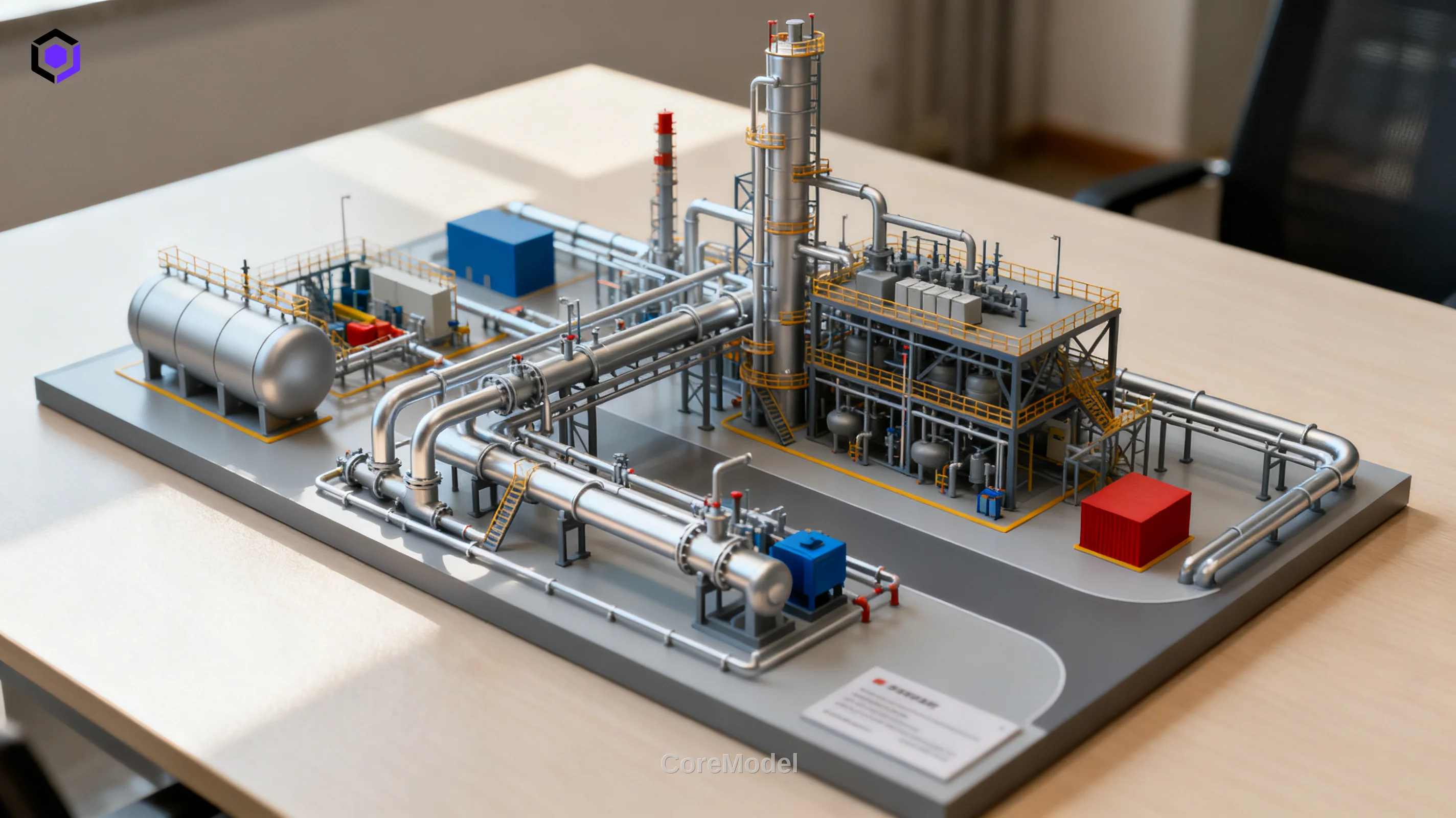
An industrial scale model is more than a miniature—it's a strategic tool for stakeholder communication, marketing, and operational planning. This 7-step checklist covers everything from defining purpose and selecting a manufacturer to materials, detailing, and long-term maintenance. Whether you need a petrochemical diorama, a new energy showcase, or a smart logistics visualization, following these steps ensures a high-impact, accurate, and durable model that serves your business goals.
1. Define the Model's Purpose and Audience
Before contacting a manufacturer, clarify why you need an industrial scale model. Common purposes include trade show displays, investor presentations, facility planning, training, or public relations. The audience—engineers, executives, or the general public—dictates the level of detail and interactivity required. For example, a model for a technical review may need precise piping and equipment layouts, while a marketing model might emphasize visual appeal and branding.
Defining the purpose early ensures your budget and timeline align with expectations. It also helps the model maker recommend the right scale and materials. At CoreModel, we begin every project with a discovery session to understand these objectives.
2. Choose the Right Scale for Clarity and Impact
Scale selection balances detail, size, and cost. Common scales for industrial models range from 1:50 to 1:500, depending on the facility size and viewing distance. A larger scale (e.g., 1:50) allows for intricate details like valves and walkways, ideal for close-up inspection. Smaller scales (1:200 or 1:500) are better for overall site layouts and large industrial complexes.
Consider the display environment: a model for a boardroom table should be compact, while a trade show exhibit may require a larger, eye-catching scale. Our team can produce models in any scale, ensuring optimal visibility and accuracy.
3. Select a Manufacturer with Proven Industry Experience
Your industrial scale model is only as good as the team behind it. Look for a manufacturer with a portfolio spanning multiple industries—oil and gas, power generation, manufacturing, and logistics. Experience with diverse projects ensures they understand your sector's unique requirements, from safety features to proprietary processes.
Check for in-house capabilities: design, engineering, fabrication, and painting. A manufacturer that handles everything under one roof maintains quality control and meets deadlines. CoreModel, with 15+ years of experience and clients in 80+ countries, offers end-to-end services and a track record of delivering complex industrial dioramas.
4. Provide Accurate Technical Data and References
The accuracy of your model depends on the quality of information you provide. Supply 2D drawings, 3D CAD files, P&IDs (Piping and Instrumentation Diagrams), site photos, and color specifications. If CAD data is unavailable, our team can work from sketches and reference images to recreate the facility faithfully.
Clear communication during the data handover prevents costly revisions. We recommend assigning a single point of contact from your side to streamline feedback and approvals.
5. Specify Materials and Finishes for Durability
Industrial models must withstand handling, transport, and display conditions. Common materials include acrylic, ABS plastic, polyurethane, and brass for structural components, with photo-etched metal for fine details. For high-traffic exhibitions, consider protective coatings and sturdy bases.
Finishes should match your brand or industry standards—matte for industrial equipment, glossy for cleanrooms, and metallic for piping. Discuss lighting options (LED illumination) to highlight key areas and enhance realism. Our models are built to last, using premium materials and precise finishing techniques.
6. Review and Approve the Design Iteratively
Before fabrication begins, review the 3D design renderings. This stage allows you to verify layout, proportions, and color schemes. Request multiple views and, if possible, a virtual walkthrough. Iterative approvals catch errors early, saving time and cost.
At CoreModel, we provide regular updates with renders and progress photos. Our collaborative process ensures your vision is realized accurately. Once approved, fabrication proceeds with precision CNC machining, laser cutting, and hand assembly.
7. Plan for Maintenance and Long-Term Display
An industrial scale model is an investment that should last for years. Protect it from dust, direct sunlight, and physical damage. Use a display case with UV-filtering acrylic and include a maintenance kit with a soft brush and cleaning solution.
For models with electronic components, ensure access for bulb replacement and wiring checks. We offer a care guide and optional maintenance services to keep your model in pristine condition. Proper care preserves its value for trade shows, training, and corporate displays.
Conclusion
Building an effective industrial scale model requires careful planning, from defining purpose to long-term maintenance. By following this checklist, you ensure a model that not only impresses but also serves as a powerful communication tool. Partner with an experienced manufacturer like CoreModel to bring your industrial vision to life with precision and quality.