

Introduction to Refinery Scale Models
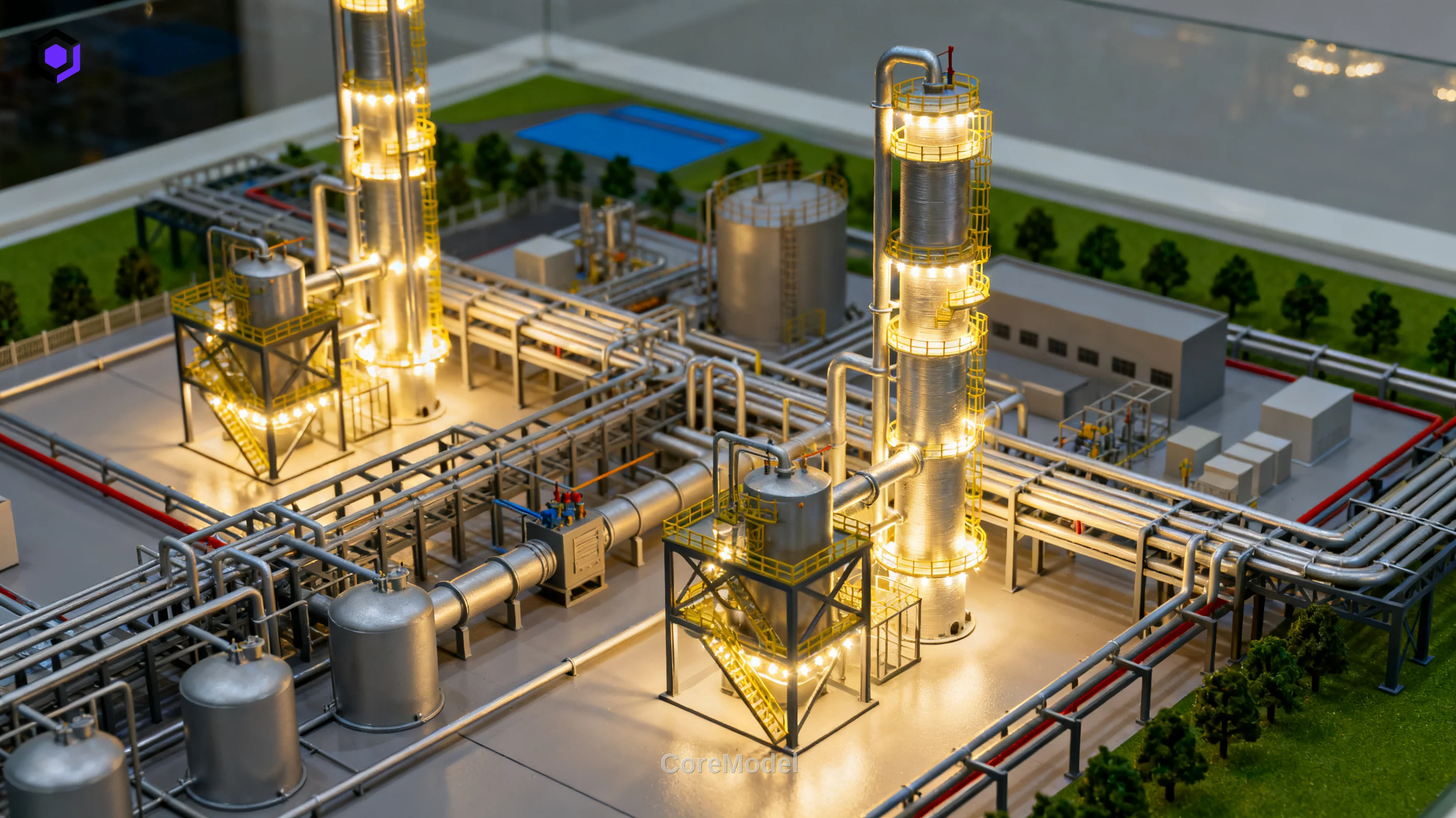
In the complex world of petrochemical industries, refinery scale models serve as indispensable tools for visualization, planning, and communication. These detailed replicas, also known as industrial dioramas or petrochemical models, provide a tangible representation of sprawling refinery complexes, enabling stakeholders to grasp the intricacies of operations, layout, and safety protocols. At CoreModel, with over 15 years of experience and a footprint in 80+ countries, we specialize in crafting custom industrial dioramas that meet the exacting standards of B2B clients.
Whether for training, marketing, or engineering review, these models bridge the gap between abstract blueprints and physical reality. In this article, we delve into the significance, applications, and craftsmanship behind refinery scale models, and why they are a vital asset for industries ranging from oil and gas to renewable energy.
Why Refinery Scale Models Matter in the Petrochemical Industry
Refineries are vast, intricate facilities where even minor misunderstandings can lead to costly errors or safety hazards. Refinery scale models offer a scaled-down, three-dimensional view that enhances comprehension and decision-making. Here’s why they are crucial:
Enhanced Visualization and Communication
Stakeholders, from engineers to executives, can better understand the spatial relationships between units, pipelines, and safety systems. A physical model makes presentations more engaging and facilitates clearer communication during design reviews or public consultations.
Training and Simulation
For operator training, petrochemical models provide a hands-on learning tool. Trainees can familiarize themselves with the layout, identify critical valves, and simulate emergency procedures without disrupting actual operations.
Marketing and Stakeholder Engagement
In trade shows or investor meetings, a detailed refinery scale model captures attention and conveys technical prowess. It serves as a powerful marketing asset, demonstrating a company’s capabilities and commitment to precision.
Key Features of High-Quality Refinery Scale Models
Not all models are created equal. A top-tier refinery scale model from CoreModel incorporates several essential features:
Accurate Proportions and Detailing
Using CAD data and blueprints, we ensure every component—from distillation columns to flare stacks—is replicated to scale. Details such as walkways, ladders, and piping are meticulously rendered.
Durable Materials and Craftsmanship
We utilize high-grade acrylics, resins, and metals to ensure longevity and resistance to environmental factors. Our artisans employ techniques like laser cutting and 3D printing to achieve precision.
Interactive Elements
For enhanced engagement, models can include LED lighting to simulate process flows, or even motorized parts for dynamic demonstrations. These features make the model not just a static display but an interactive experience.
Applications Across Industries
Refinery scale models are not limited to oil refineries. Their applications span various sectors:
New Energy Models
With the shift towards renewable energy, we create models for biofuel plants, hydrogen production facilities, and carbon capture units. These new energy models help visualize sustainable technologies.
Smart Logistics Models
Refineries often integrate with logistics hubs. Our smart logistics models depict the flow of materials, from pipeline networks to loading terminals, optimizing supply chain understanding.
Defense & Aerospace Models
In defense, refinery models can simulate fuel supply chains or be part of larger strategic dioramas. Our expertise in defense & aerospace models ensures compliance with stringent requirements.
The CoreModel Advantage: Crafting Refinery Scale Models
At CoreModel, based in Shenzhen, China, we combine advanced technology with artisanal skill. Our process begins with a thorough consultation to understand your specific needs, followed by design, prototyping, and production. We serve clients globally, delivering custom industrial dioramas that exceed expectations.
Case Study: A Refinery Model for a Middle Eastern Client
Recently, we completed a 1:100 scale model of a major refinery for a client in the Middle East. The model featured over 5,000 individual parts, including a working flare stack and LED-illuminated control rooms. It was used for both training and investor presentations, receiving accolades for its realism and durability.
Conclusion: Elevate Your Projects with Refinery Scale Models
In an industry where precision and clarity are paramount, refinery scale models are more than just displays—they are strategic tools. Whether for training, marketing, or engineering, a high-quality model from CoreModel can transform how you communicate and plan. With our 15+ years of experience and global reach, we are your trusted partner for custom industrial dioramas. Contact us today to discuss your next project and discover how our models can bring your refinery to life.