
Introduction to Logistics Center Models
In today's fast-paced supply chain environment, logistics center models have become indispensable tools for planning, optimizing, and communicating complex operations. These physical scale models provide a tangible representation of distribution centers, warehouses, and fulfillment hubs, enabling stakeholders to visualize layout, material flow, and operational efficiency like never before.
At CoreModel, we specialize in crafting high-precision logistics center models that serve as powerful decision-making aids for businesses across 80+ countries. With over 15 years of experience, we understand the nuances of industrial modeling and how to translate intricate logistics systems into detailed, accurate dioramas.
Why Logistics Center Models Matter in Modern Supply Chains
A logistics center is the heart of any distribution network. Whether it's a cross-dock facility, a cold storage warehouse, or an e-commerce fulfillment center, the efficiency of these hubs directly impacts delivery times, costs, and customer satisfaction. Logistics center models offer a three-dimensional, hands-on way to analyze and improve these critical operations.
Enhanced Visualization and Communication
Blueprints and CAD drawings can only convey so much. A physical scale model brings the logistics center to life, allowing executives, engineers, and clients to walk around and see the entire operation from a bird's-eye view. This is particularly valuable when presenting to non-technical stakeholders or investors who need to grasp the scale and complexity of a project quickly.
Operational Planning and Optimization
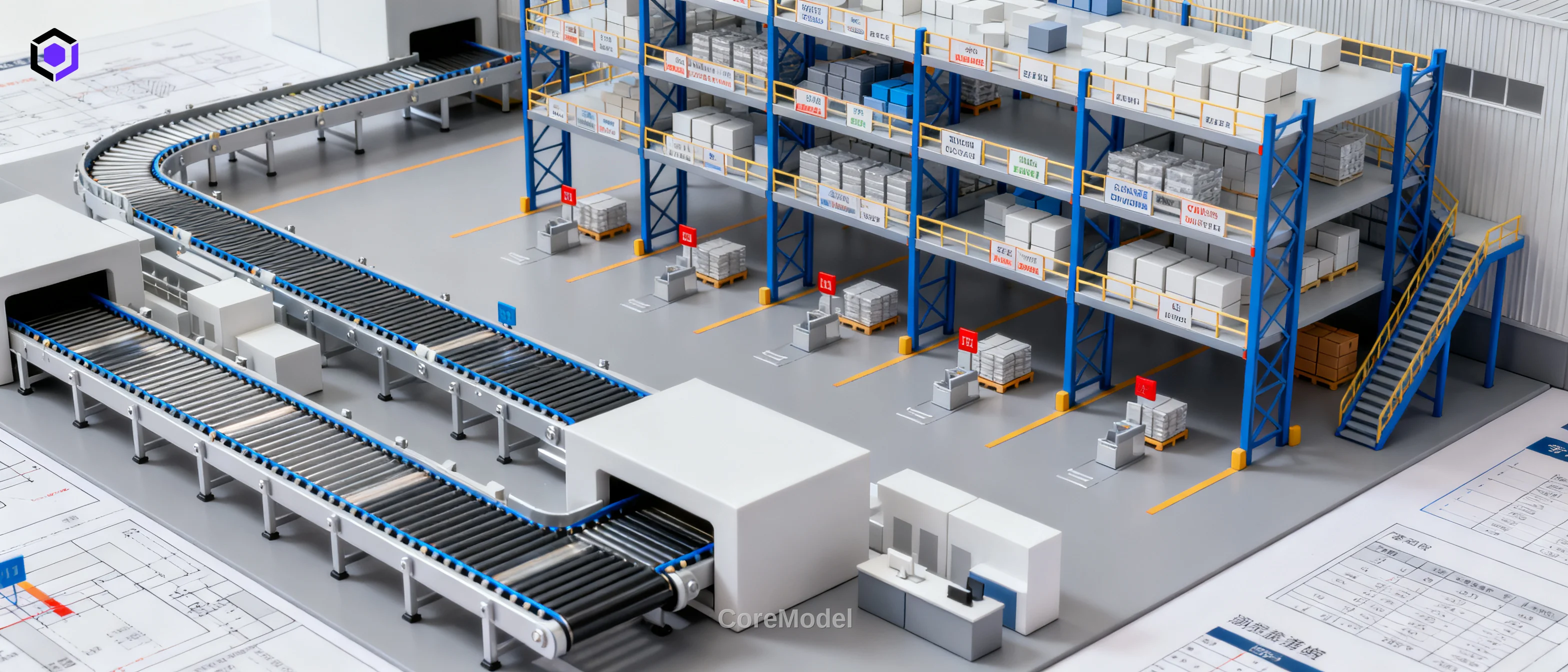
By replicating the exact dimensions and layout of a facility, logistics center models enable simulation of material flow, identification of bottlenecks, and testing of different configurations. For example, a model can show how forklifts navigate aisles, where conveyor systems intersect, and how goods move from receiving to shipping. This hands-on approach often reveals inefficiencies that digital models might miss.
Training and Education
Training staff on a new logistics center layout is easier with a physical model. New employees can visually understand the facility's zones, safety protocols, and workflow. Educational institutions also use these models to teach supply chain management principles, making abstract concepts concrete.
Key Components of a High-Quality Logistics Center Model
Creating a realistic and useful logistics center model requires meticulous attention to detail. At CoreModel, every model is custom-built to reflect the unique characteristics of your facility. Here are the core elements we incorporate:
Architectural Accuracy
The building structure itself—from roof trusses to loading docks—must be scaled precisely. We use laser-cut acrylics, high-density foams, and 3D-printed parts to replicate walls, mezzanines, and office areas. The goal is to achieve a 1:100 or 1:200 scale that captures the true proportions.
Material Handling Equipment
Forklifts, pallet jacks, conveyor belts, automated guided vehicles (AGVs), and robotic arms are all miniaturized. These elements are not just decorative; they help viewers understand the flow of goods and the interaction between different systems.
Storage and Racking Systems
Selective pallet racking, drive-in racks, cantilever racks, and shelving units are represented with precision. We often use etched brass or acrylic to create fine details like beams and uprights. For automated storage and retrieval systems (AS/RS), we model the cranes and shuttles to show their range of motion.
IT and Control Systems
Modern logistics centers rely on sophisticated software. While a physical model can't run code, we can depict control rooms, server racks, and sensor placements. Some models even incorporate LED lighting to simulate active conveyor lines or picking indicators.
Landscape and Surroundings
The model often includes the surrounding environment—truck yards, rail sidings, parking areas, and access roads. This context is crucial for understanding how the logistics center integrates with the broader transportation network.
Applications Across Industries
Logistics center models are used in a variety of sectors, each with specific requirements:
- E-commerce and Retail: Fulfillment centers with high-speed sorting systems and multi-level pick modules.
- Manufacturing: In-plant logistics and raw material warehouses that feed production lines.
- Pharmaceuticals and Cold Chain: Temperature-controlled storage and strict compliance zones.
- Ports and Airports: Container terminals and air cargo hubs with intermodal connections.
- Third-Party Logistics (3PL): Multi-client facilities with flexible layouts.
CoreModel has delivered logistics center models for many of these applications, helping clients secure approvals, optimize designs, and win contracts.
How CoreModel Brings Your Logistics Center to Life
With a team of skilled model makers, engineers, and designers, CoreModel follows a rigorous process to ensure every model meets your exact specifications. We start with your CAD files, blueprints, or even sketches, and then use advanced techniques like CNC machining, laser cutting, and 3D printing to fabricate parts. Painting and assembly are done by hand to achieve a lifelike finish.
We also offer interactive features such as touch-sensitive buttons that illuminate different zones or moving parts that simulate conveyor operation. These additions make the model not just a static display but a dynamic storytelling tool.
Choosing the Right Scale and Level of Detail
When commissioning a logistics center model, consider its primary purpose. For a boardroom presentation, a smaller scale (e.g., 1:200) with moderate detail may suffice. For training or operational analysis, a larger scale (1:50 or 1:100) with intricate details is better. Our team can advise on the optimal balance between size, cost, and functionality.
Conclusion
Logistics center models are more than just miniature replicas; they are strategic assets that enhance planning, communication, and training. By investing in a high-quality scale model, you gain a powerful tool to optimize your supply chain and impress stakeholders.
If you're ready to elevate your logistics planning, contact CoreModel today. With our 15+ years of expertise and global reach, we'll craft a custom model that perfectly captures your vision.