

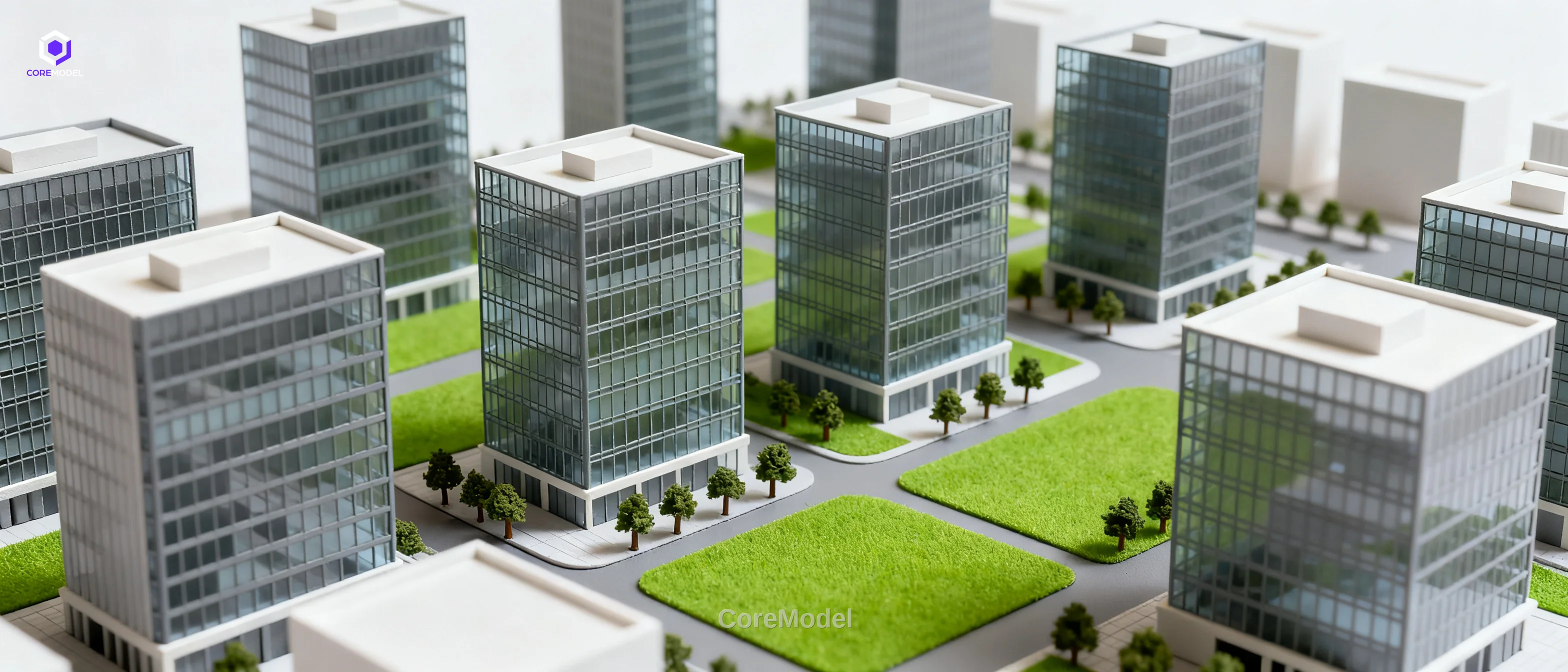
Commercial Models: Precision Scale Solutions for Business
In the competitive world of B2B sales and project development, visual communication is paramount. Commercial models—highly detailed physical scale replicas of buildings, industrial facilities, and urban developments—have become indispensable tools for businesses seeking to win contracts, secure investments, and communicate complex ideas with absolute clarity. Unlike standard architectural models, commercial models are engineered to serve specific business objectives, from marketing high-end real estate to demonstrating the operational flow of a new petrochemical plant.
Why Commercial Models Drive Business Success
In an era of digital renderings and VR walkthroughs, one might question the relevance of physical models. However, the tactile, three-dimensional nature of a commercial model creates a level of engagement that screens cannot replicate. They allow stakeholders to gather around, interact, and gain an immediate, holistic understanding of a project's scale, spatial relationships, and design intent. This is particularly crucial in sectors like real estate development, urban planning, and infrastructure, where decisions involve significant capital and long-term commitments.
Enhancing Sales and Marketing Efforts
For property developers and sales teams, a meticulously crafted commercial model is a silent salesperson. It showcases the finished product in its best light, highlighting premium materials, landscaping, and architectural details. In a sales gallery, a model can be the centerpiece that captivates potential buyers, making the dream of a future home or office space feel tangible. This emotional connection often translates directly into faster sales and higher closing rates.
Facilitating Stakeholder Communication
Complex industrial projects, such as new energy facilities or logistics hubs, involve multiple stakeholders—engineers, investors, government regulators, and community representatives. A commercial model serves as a universal language, bridging the gap between technical drawings and layman's understanding. It clearly demonstrates how a facility will function, how it integrates with its surroundings, and what its environmental impact will be, thereby smoothing approvals and fostering trust.
Types of Commercial Models We Build
At CoreModel, we bring over 15 years of expertise to crafting a diverse range of commercial models for clients in 80+ countries. Our portfolio spans across key industries:
Architectural & Real Estate Models
From single luxury villas to sprawling mixed-use developments, our architectural models are built to impress. We use a variety of materials—acrylic, resin, wood, and 3D-printed components—to accurately represent facades, interiors, and landscaping. These models are ideal for sales centers, investor presentations, and public exhibitions.
Urban Planning & Smart City Models
Our urban planning models offer a bird's-eye view of entire districts, incorporating roads, public transport, green belts, and infrastructure. For smart city projects, we integrate LED lighting, moving elements, and even digital overlays to demonstrate traffic flow, energy grids, and data connectivity, making them powerful tools for government and municipal presentations.
Industrial & Energy Models
We engineer precision models for the petrochemical, energy, and manufacturing sectors. These models accurately depict complex machinery, pipelines, storage tanks, and safety systems. They are used for operator training, safety briefings, and stakeholder education, helping to de-risk projects and improve operational understanding.
Defense & Aerospace Models
For defense and aerospace clients, we produce highly classified and accurate models of vehicles, aircraft, and installations. These models serve a variety of purposes, from design validation and engineering reviews to display at trade shows and in museums.
Rail Transit & Logistics Models
Our rail transit models showcase stations, tracks, and rolling stock in fine detail, supporting infrastructure planning and public communication. For logistics and warehousing, we create models that illustrate automation, conveyor systems, and material flow, aiding in process optimization and investor presentations.
The CoreModel Advantage
Choosing the right partner for your commercial model is critical. CoreModel stands out for several reasons:
- 15+ Years of Craftsmanship: Our team combines traditional model-making techniques with advanced digital fabrication, including CNC machining and 3D printing, to achieve unmatched accuracy and detail.
- Global Experience: We have successfully delivered projects across 80+ countries, understanding diverse cultural and regulatory requirements.
- End-to-End Service: From initial concept and design consultation to delivery and installation, we manage every step of the process, ensuring a seamless experience.
- Customization & Innovation: Every project is unique. We work closely with you to incorporate specific features, such as lighting, motion, and interactive elements, that make your model a true representation of your vision.
Investing in Your Project's Future
A commercial model is more than a display piece; it is an investment in your project's success. It can accelerate approvals, attract investment, and build confidence among all stakeholders. Whether you are launching a new residential development, planning a smart city initiative, or expanding an industrial facility, a high-quality commercial model from CoreModel gives you a tangible competitive edge.
Ready to elevate your next project with a precision-crafted commercial model? Contact CoreModel today for a consultation. Let us help you turn your vision into a three-dimensional reality that speaks volumes.